
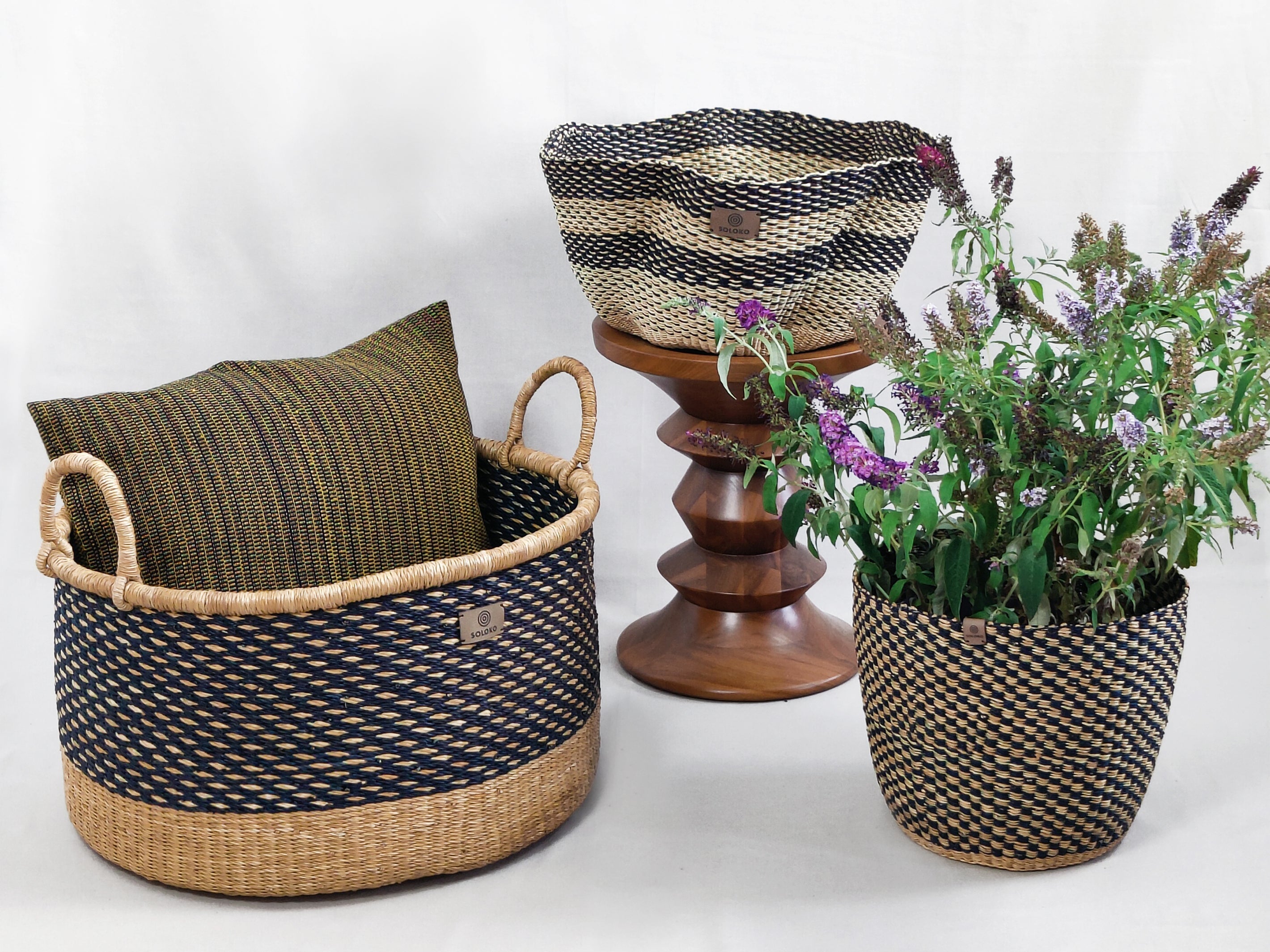
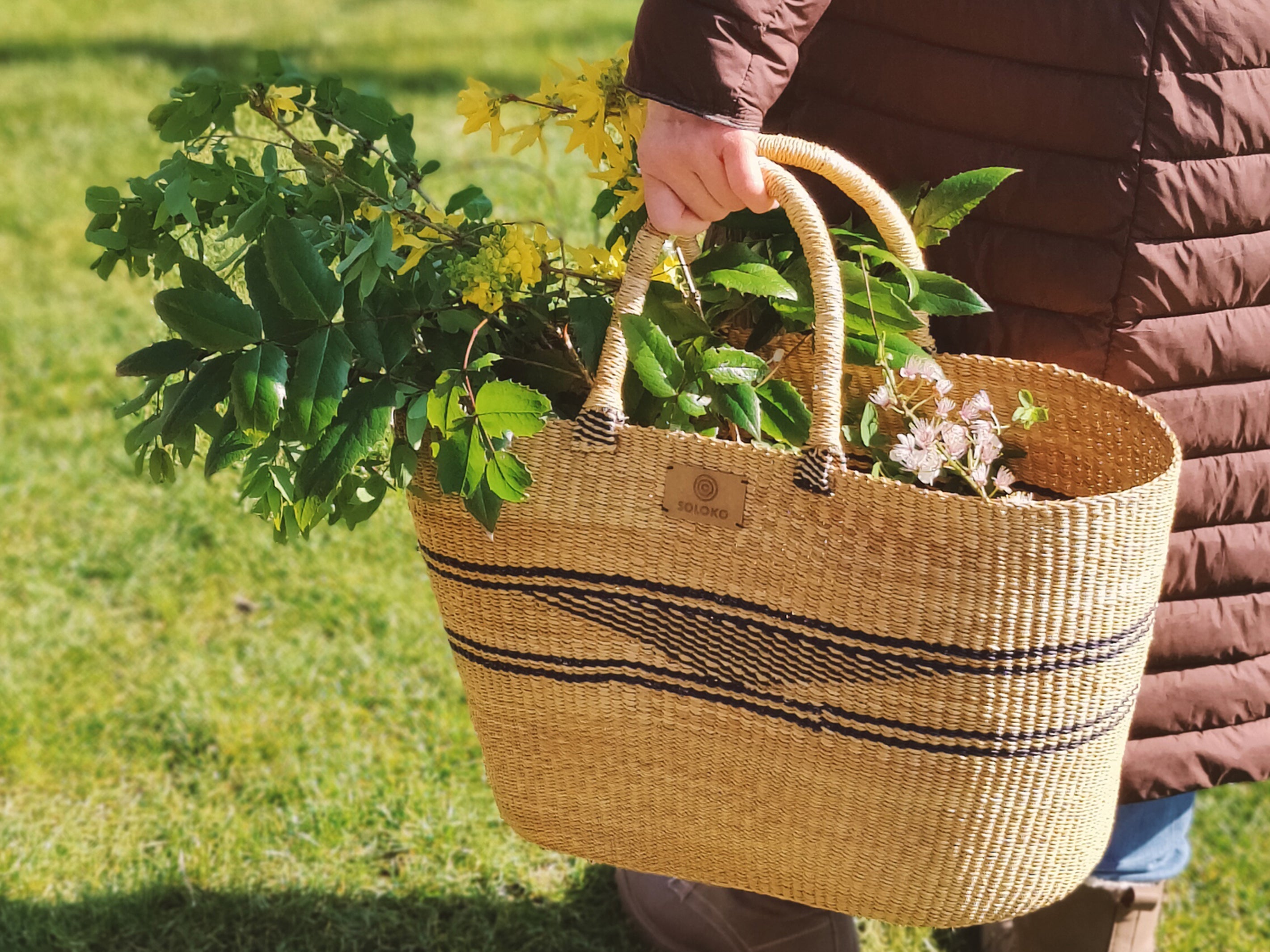

A basket can be a simple thing: somewhere to store blankets, carry belongings, organise a room or bring texture into a home.
But when that basket is made entirely by hand, the finished piece carries much more with it.
Behind every SOLOKO basket is a traditional process that begins with elephant grass and ends with a carefully woven object shaped by the experience and skill of its maker. Understanding this process changes the way we see the finished product, from a useful home accessory to something made with time, knowledge and human hands.
For SOLOKO, this craftsmanship is an important part of creating products that are made to be appreciated and enjoyed for years.
From Grass to Material
The baskets are made using Veta Vera, better known as elephant grass.
Elephant grass is a robust and fibrous plant, making it particularly well suited to basketry. Its natural strength contributes to the durability of the finished products, allowing them to become practical pieces for everyday life.
But before a single basket can be woven, the grass needs to go through several stages of preparation.
The process begins with the harvest of the grass. After harvesting, it needs to dry for several weeks before it can be prepared for weaving.
This waiting period is an important reminder of the nature of handmade production. The material cannot simply be taken from a production line and immediately transformed into a finished product. It needs time to be prepared.

Preparing the Elephant Grass
Once the grass has dried, the stalks are split.
This is usually done with the teeth, before the individual stalks are twisted together. The prepared grass is then ready for the next stage of the process: dyeing.
The dyeing process is what gives the baskets their beautiful, vibrant colours.
Only after these stages have been completed are the individual straws ready to become part of a finished basket.
What looks like a simple woven structure is therefore the result of a much longer process, from harvesting and drying to splitting, twisting and dyeing before weaving can even begin.
The Art of Weaving by Hand
Once the elephant grass has been prepared, the actual weaving can begin.
Our hand-woven products are created using traditional weaving techniques, requiring experience and skill from the people who make them.
Depending on the product, the process can be very time-consuming.
This is particularly important when considering what makes a handmade basket valuable. The price of a handcrafted object does not simply reflect the material used to make it. It also reflects the knowledge required to transform that material, and the time invested in creating the finished piece.
Every woven basket represents a process that cannot simply be rushed.
Working with Atampoka Crafts
For our beautiful hand-woven products made from elephant grass, SOLOKO works closely with Atampoka Crafts, a group of weavers from Bolgatanga and the surrounding local communities.
The group is made up of family and friends, with weaving providing an important means of securing the livelihoods of these communities.
This connection is an essential part of what makes the baskets meaningful to SOLOKO.
When you choose a handwoven basket, you are not simply choosing an object for your home. You are choosing something connected to a community of skilled makers and to a traditional form of craftsmanship that provides an important livelihood.

When a Basket Becomes a Work of Art
Some pieces demonstrate the skill of their makers particularly beautifully.
The Sitso basket, for example, is a real work of art that particularly expresses the talent of the weavers.
Its beauty lies not simply in the finished form, but in understanding what sits behind it: the material, the preparation, the traditional weaving techniques and the experience required to transform elephant grass into a finished piece.
This is part of the appeal of handmade design. The craftsmanship does not disappear once the product is finished. It remains part of what makes the object special.
Why the Making Process Matters
In a world filled with products that can be produced quickly and consistently, handmade pieces offer something different.
They allow us to see value in time, skill and traditional knowledge.
A handwoven basket is not simply a storage solution. It is the result of a process that begins with a natural material, requires careful preparation and is completed through skilled craftsmanship.
The more we understand how something is made, the more we can appreciate what we are bringing into our homes.
This is particularly important when choosing pieces that we hope to live with for a long time. Rather than buying purely for a particular trend or moment, we can choose objects for their material, their craftsmanship and the story behind them.
Bringing Handwoven Craftsmanship into Your Home
The beauty of a handwoven basket is that its story does not end when the weaving is finished.
It becomes part of everyday life.
A basket can hold blankets in the living room, organise belongings, add texture to a bedroom or simply stand as a beautiful object in its own right. Its practical purpose allows the craftsmanship behind it to become part of the everyday rather than something reserved for display.
The natural character of elephant grass also makes these pieces easy to incorporate into different interiors, from contemporary spaces to homes filled with colour, pattern and collected objects.
Explore SOLOKO's collection of hand-woven baskets.

Choosing Objects with a Story
For SOLOKO, craftsmanship is about more than creating beautiful products.
It is about maintaining connections with skilled makers and recognising the value of traditional techniques. By working closely with Atampoka Crafts and the weaving communities around Bolgatanga, SOLOKO supports a form of production that is closely connected to the livelihoods of the people who create these pieces.
And for the person bringing one of these baskets into their home, that story becomes part of the object.
The next time you look at a handwoven basket, consider everything that came before it: the harvest of the elephant grass, the weeks of drying, the preparation of the stalks, the dyeing, and finally the skilled hands that turn the prepared material into something beautiful and useful.
That is the difference between simply owning a basket and choosing a piece of craftsmanship.
Explore the full collection of hand-woven baskets and discover pieces made from elephant grass using traditional weaving techniques.


Leave a comment